Thursday, January 23, 2020

post # 3 - the patience game (motherhood series)

If you thought patience was tough, wait till you become a parent. And if you’re already one, I salute thee. Parenthood is so tough. The saying, It takes a village to raise a child, has completely different connotations in the age of the internet. In the East, we already have everyone from our own mothers and mother-in-laws to total strangers we run into at gatherings, giving us tips on raising our children. Then there are friends and cousins who keep sending articles on everything from potty training to eating habits to anger management issues. As if that wasn’t enough, there are always the videos on Youtube which can provide any amount of information on every possible topic. There is so much information overload that when the time comes to apply something that you’ve either read, watched or listened, you don’t remember what it is. At least, that’s what I think.

Over these past two plus years with the twins, I’ve realised that there are three things that really make a difference to both your and the child’s sanity. Patience. Repetition. Forgiveness.

Be patient with your child, is the advice everyone gives. Being patient as a parent doesn’t just mean not screaming or not getting angry at your child. I’ve learned and realised that patience also means to give the child and yourself space to understand each other. I might be sounding like Yoda on parenthood right now but I’ve learned with trial and error also. Getting angry at a screaming child is going to make him/her scream more. Sometimes, even distracting a screaming child calmly doesn’t work. A few weeks back, while dropping the kids to school, Z started throwing a fit because he wanted me to sit with him. He doesn’t do this everyday but today, he was really upset and was crying and screaming. I tried to distract him by singing his favourite nursery rhyme and showing him the sights outside but he just wan’t giving in. So I gave in. 

So there might be some of you who’ll say, this was wrong. Now he will know that whenever he wants something all he has to do is scream and kick and his mother will give in. I disagree. I used to think the same but I’ve realised that this isn’t the case. Yes, maybe he might have calmed down after a while but he’d still have that negative energy inside him. His anger, which he suppressed, would either have come out later in the day or even worse, remained bottled up inside him. By giving in I made him happy and he went to school with a positive mind. Does this mean that I always give in when my child is screaming? No. But luckily, because I give in on simple matters, they don’t scream in every situation. Also, it is a combination of common sense and patience. Handling a screaming toddler in a car is much different from handling him/her in the house. 

Choose your battles with your child. If you’re going to scold or punish or not let them have their way every time, then you won’t have any ammunition left for the major battles later on. 

Patience is also of another level. We are told how our child should behave at a certain age by all these experts. So at nine months he/she must do this, at one year that is a given etc etc. Have patience with your child if he/she doesn’t fit the framework. Your stress will rub onto your child. When Z was one year ten months, all he could say was ‘papa’. We went to London and his paediatrician recommended we show him to a speech therapist. It was a very text book suggestion. But I knew my child and I knew that he was going to start talking without the aid of a therapist. Some children talk late, some crawl late, some walk late. I’m not saying delay treatment if there is something physical or otherwise not a 100% with your child but sometimes, you need to use your own knowledge of your offspring to make the correct decision about his/her welfare. In Z's case, he started talking in a few weeks after starting school at two years of age. 
 Unconditional love will
help them steer their life
successfully. 

You know your child best. Trust your judgement and intuition. 

Repetition works on so many levels. By reading a finite number of books to them every day I’ve made them recognise words and letters and now they can tell the stories by themselves, even if it is in mono syllables. So Z can tell you his own, mostly monosyllabic, version of Little Red Riding Hood. N knows how to make the animal figures stand in a straight line for an animal parade. They both know they can only do puzzles and play doh on their activity table but they can read anywhere they want to. Of course, sometimes this works like magic but other times, I’ve failed. No matter how many times I tell Z not to touch my phone, he does. Again, in this case I’ve noticed that if I let him play with it (it’s usually locked, mostly he just ends up opening the camera and taking a lot of black photos!) for a while and then ask him to return it, he usually does. Give in and take. That’s what I think is the secret to handling toddlers. 

However, don’t always give in. The other day we were at the mall and I walked into Miniso. N picked up this adorable cuddly toy dog and hugged it indicating, quite obviously, that she wanted to take it home. So either I could have said, awww…let me buy this for my baby or, put it back right now! What I did at that time amazed me too. I told her that this shop was the dog’s home and he lived here with his papa and mama. We need to let him stay with his mama and N immediately walked to the shelf where all the dogs were, put it back with ‘his mama’ and waved goodbye to it as I quickly ushered both N and Z out of the shop. Will I be able to do this always? No. But this decision of what and when to buy should be in my hands and not the child’s. That is the approach I want to develop and cultivate. 

Just like we struggle with tasks and emotions on a daily basis, so do our children. I feel we keep forgetting that they are little people too and treat them like they are some sort of mini robots who have to turn, sit, stop, stand, smile, wave and generally be happy at our commands. Sometimes they do, other times they don’t. Which is alright as long as we know when to take charge, when to step back and at times, to give in. 

Thursday, January 16, 2020

Post # 2 - Read & Review: The Testaments

17th Jan 2020 

Still reading. Didn't get the chance to finish it yesterday or maybe I didn't have the courage? 

16th Jan 2020 - 10:10am

I’m on page 340 so I’m more than halfway done. I’ll probably finish the book today because it has reached a point where there is too much at stake and I need to know how it ends. Does Gilead survive? Does Aunt Lydia’s scheme work? Do Agnes and Nicole get reunited with their mother?

The thick hardcover is lying next to me on the desk as I write this. Why am I not reaching for it? Honestly, I’m a bit afraid. What if there is no happy ending which, knowing Atwood, is not a given. That will be very disappointing. Especially when I have invested myself in the story so much (I read The Handmaid’s Tale before I started this book). 

Just like Orwell did in 1984, Atwood creates a world which is so believable it’s almost scary. I don’t think I have the courage to watch the television series of The Handmaid’s Tale. Seeing the story come to life on screen will probably be heart wrenching. 

More on the book later. 

21st Jan 2020

I finished the book on 16th only and decided to think about it for a bit before posting my views. It was a great book. The plot was perfect, the characters were extremely well done and believable. The connections with The Handmaid's Tale were there and I'm so glad I read it. How did I feel when I finished the book? Relieved but a bit confused also. Why did this book win the Booker Prize? It was a cross between literary fiction and a suspense novel and also, it had a really filmi ending. It's as if she has written this book keeping in mind that it will be made into a movie or television series. I'm not saying it wasn't a great read. Maybe not as haunting and disturbing as The Handmaid's Tale, but a good story. Now let's see what the verdict is at the DWL Karachi Readers' Club.  

Sunday, January 12, 2020

Post # 1 - Beginnings

A lot has happened in these first 12 days of the new year. The winter holidays are over and the twins are back to school which means early mornings and it’s kind of super cold in Karachi these days so it’s a miracle I crawl out from under my warm blanket every morning. Hubby dear is back to work with old and new shoots. I started and finished a book and am now on the next one. A story idea which had been bothering me for months has finally started to take some shape. I have decided to try writing personal, non-fiction essays (easier said than done but hey, one has to start somewhere!). I have a new profile picture on Facebook after, like, six years. That alone is huge.

It’s easy to make resolutions or intentions for new year but as we usually enter it with pretty much the same people and the same commitments, it’s easy to feel demotivated and a little overwhelmed. What is important though, is not to lose sight of the big picture. In my case, the major struggle is how to juggle the kids and my writing. Reading I can sneak in for small time intervals during the day but it’s finding a dedicated time for writing which is tough. And by the time I get to it, at around 9pm at night, I’m too tired to think let alone write. 

We usually set goals but don’t think how we are going to go about them. It’s easy to say that we’ll go to the gym everyday or meditate or whatever it is we want to do but really the days in the new year pretty much follow the same routine as the previous one. If we are really serious about seeing our goals through, we need to plan a bit and change our routine. And change is always difficult. I always resist change. 

As far as my writing is concerned, the best solution I’ve come up with is leaving the kids at my mom’s place. This gives me a couple of hours in which I can write without any disturbance. Even if I do this three times a week, that gives me at least 6-7 hours per week of unadulterated writing time which I think is super. Ofcourse, if I have writing to show for that time, it’ll be even more super but let’s not start the new year on a negative or ironic tone, shall we?  

It’s super cloudy in Karachi today and super cold too. My feet feel like ice and I think I’ll just go and wear some socks. I’m a big fan of socks. You’ll find me wearing socks with penguins, avocados, cupcakes, owls and even Sponge Bob. And the latest addition in my socks collection is Van Gogh’s, Starry Night. Why wear boring black and white socks when cute animals and paintings can keep your feet looking good and warm? 

Monday, December 30, 2019

2019 - The End

It's that time of the year when we make resolutions and revisit the various highs and lows of 2019 that we collectively, and individually, experienced. It’s also that time of the year when a gazillion posts about how you can become a 'better' person fill up the internet and Facebook starts sending everyone their respective 'highlights of the year'. Which makes the end of the year a little more overwhelming than it already is or needs to be. 

How was 2019 on the beanbag?

I walked into the new year with an armful of resolutions, a self-help book (which I still haven’t finished) and a Google sheet. This sheet became something out of a horror story after a couple of months. The thought of this daily accountability, though very exciting at first, soon became a nightmare. Even though it did help me get into the habit of performing some tasks, there were others I didn’t or couldn’t do every day and the sight of these incomplete tasks made me loathe the sheet. So I abandoned it and decided to focus on the big and some not so big goals I had set for the year.

The one big learning I’ve come away with from this goal setting process is that achieving anything requires resilience and consistency. No matter what the world throws at you, you’ve got to stick to your path. If you stray from your path, the big bad wolf will come after you and we know what he wants. I was able to do some things this year which I had not thought possible. At the same time, there were some other things which I failed at miserably. Does that make 2019 a bad year? Not at all. On the contrary, it was a year full of learnings and personal discoveries. 

Major takeaways from 2019:

1. Read for ten minutes everyday. There is no maximum limit.

2. Talk to Allah. There is no better meditation than prayer. 

3. Don’t be afraid of the world. Write, perform, create - on YOUR terms. 

4. Take more risks, Farheen! Be bold and make a statement. Whether it be through your attire or your posts on social media platforms. Get moving girl!

5. Wear more saris. Investing in lawn suits is ridiculous.

6. Spend quality time with the twins. In a couple of years they’ll be off to university and then I’ll miss not being with them. 

7. Take out the DSLR. Take pictures. Find beauty in ordinary things. Make an effort. You’ve done it before.

8. Write the twins’ journal regularly. Write in your own journal regularly. 

9. Be kind. Be patient. Be kind. Be patient. 

10. Focus on your health. Do what makes you happy and content but do it diligently and sincerely. 


Signing 2019 off with some words of wisdom from my favourite bear, Winnie the Pooh. "Don't underestimate the value of doing nothing, of just going along, listening to all the things you can't hear and not bothering".


Note: Some of the highlights of 2019 on the beanbag. You can read about them here, here, here, here, here, here, here, here, and here. Whew!

Photograph: I took this pic of Winnie the Pooh and Piglet at the Flower Dome in Singapore during our visit in Nov-Dec 2019. 


Friday, December 27, 2019

Post # 31 - 2019 in books

This post is a long one. You've been warned. 

Last year I just managed to read six books even though I had set a lofty goal of reading a 100. Actually a 100 books in 365 days is totally do-able if you don’t have twins and Netflix. This year I decided to work around the twins and other entertainment/commitments and set a simple goal (as suggested by my bestie) of reading ten minutes everyday. The result was that I managed to finish 20 books! I know some of you will scoff at this meagre number while others will shake their head in disbelief that I even got into double digits but one can’t please everyone. 

A few books were re-reads, some of them were selections of the DWL Karachi Readers’ Club and some were from my TBR pile. So I started the year with Hanif’s latest book, Red Birds. Let’s just say that I liked his previous two books more than this one and leave it at that. Milkman by Anna Burns came next and this book was AMAZING. It was set in Ireland during The Troubles in the 70s and even though the story was about harassment, the war was weaved into it superbly. 

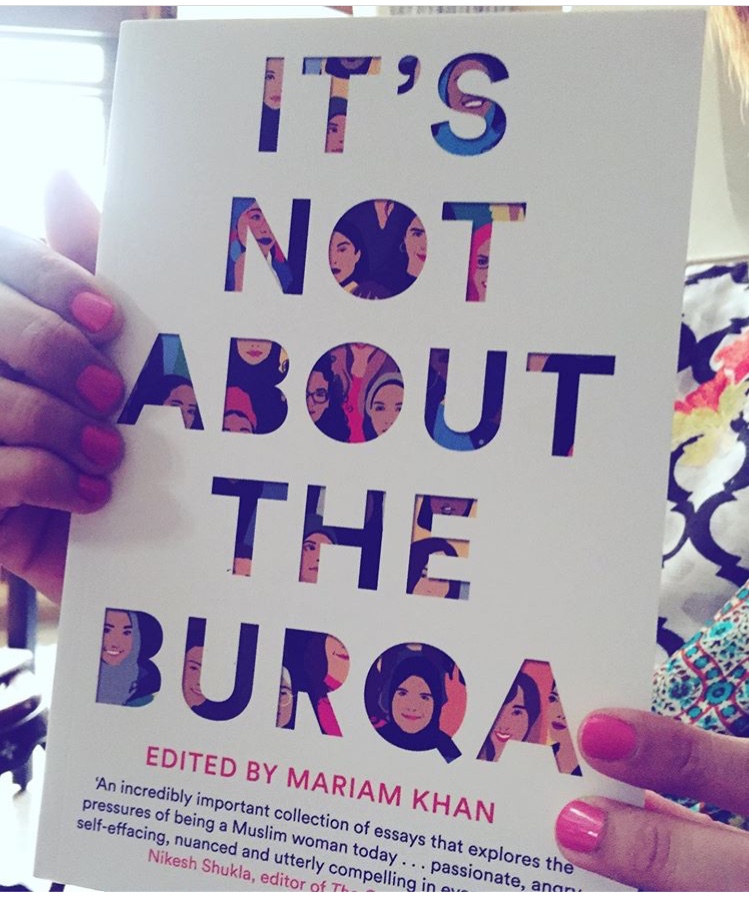
I managed to read three non-fiction books this year - Over Seventy by P.G.Wodehouse, It’s Not about the Burqa - Collected Essays, and The Sensational Life and Death of Qandeel Baloch by Sanam Maher. All three books were complete opposite of each other. 

Maher’s book on Qandeel Baloch was such a beautiful and sad read simultaneously. If you haven’t read it yet, I’d suggest you do. NOW. The essays in It’s Not about the Burqa were very intense and personal. Almost all of them gave a picture of how life is in the UK for a Muslim woman. Whether it is concerning their physical appearance or their right to marry whom they like - this book is a brave attempt at highlighting the voices of women. Kudos to all who contributed to it. 

Another book by a Pakistani author which was not just an enjoyable read but superbly written was Bina Shah’s, Before She Sleeps. The only unfortunate thing is that it isn’t available for sale in Pakistan and the only copy available was at the British Council Library. I think this might just be Bina’s best work. The plot was well constructed, the characters had depth and the dystopian setting was very, very believable. Loved it. 

Afternoon Raag by Amit Chaudhuri was, like all his books, a very pleasant read. It was as if I wasn’t reading but walking through a gallery, viewing one painting after another. The beauty of Chaudhuri’s work is that he doesn’t really provide you with a traditional story structure but invokes a mood, recreates a feeling. I followed it up with Desai’s, Baumgartner’s Bombay. A typical Desai novel full of good writing and keen observations. 

Another good read of the DWL Readers’ Club was Bird Summons by Leila Aboulela. It revolved around three Muslim women who embark on a road trip to see the final resting place of the first Scottish lady who embraced Islam. A road trip always promises an exciting story and the author didn’t disappoint. The ending wasn’t very convincing but the story was very involving and gave a good glimpse of how life is for devout Muslim women living abroad.

Diksha Basu’s, The Windfall, was a crisp read. It was very visual in its descriptions which is always good. The apartment building in Delhi East - its living conditions, the inhabitants and the dynamics they shared was probably my favourite part of the story. I thought I had the plot worked out but she gave a nice twist which left the story open-ended and quite believable. I think this book is already being made into a film. If not, it can totally be made into one. 

A book which has been adapted for television is Meera Syal’s, Life Isn’t all Hee Hee Ha Ha. I read it on Kindle even though I had noticed some copies of the book at local bookstores here in Karachi but I had dismissed it as chick-lit. Yes, I was a book snob once upon a time and no, I’m not proud of it. And I’m so glad I read it because it is a really, really good read. 

Jhabvala’s, Heat and Dust, was a re-read. I mainly read it to watch the film. FYI - an extremely decent version of the movie is available on YouTube starring Shashi Kapoor and Julie Christie. A Merchant Ivory production, the movie does total justice to the book but of course, the book is always better. 

The one book I read this year which has been rotting on my TBR pile is The Master & Margarita by Bulgakov. I really don’t know why I kept putting off reading this book because this book is a WORK OF ART. I purchased it in 2014 from a book store in Venice Beach and it has taken me five years to read it. If you haven’t read it, you must get your hands on a copy immediately. And don’t let others tell you that it’s an over-rated book. It isn’t. Ulysses is. Maybe even War and Peace (I'm ready to be roasted).

But if Russian authors aren’t your cup of tea then you can read An American Marriage by Tayari Jones. A basic plot with high drama and intense characters. I went through a number of conflicting emotions while reading it. It talks in a lot of detail about marriage, emotions and how we humans react to circumstances vs. how we are expected to react. Obama and Oprah are fans too. 

I also read Iris Murdoch’s, The Black Prince, this year. Mainly as 2019 was her birth centenary year. I’ve tried finishing this book earlier also but never got around to it. Somehow I managed to persevere this time around and I’m glad I did because Murdoch has this amazing way of writing where she does give you an ending but when you finish the book, you’re at a loss about who and what to believe. I love this about her books but I know this isn’t something which most people appreciate. 

What people want is a complete and ‘believable’ ending. Which is a bit unfair because isn’t the story the writer’s to tell? A lot of Elif Shafak’s fans didn’t like 10 Minutes, 38 Seconds in this Strange World. Or so we were told at the DWL Readers’ Club meet. This was the first book of hers I read and I loved it. This book resonated with me on so many levels that I didn’t want it to end. This is one of those books which will forever change your perception of Turkey. And it was also short-listed for the 2019 Booker Prize.

My Sister, the Serial Killer by Oyinkan Braithwaite was another Readers’ Club selection and was long-listed for the Booker Prize. The concept was interesting but it was a simple, light read. Nothing very memorable. Another book that wasn’t much home to write about was The Fix by Omer Shahid Hamid. Yet another very unimpressive read this year was, The Seven Husbands of Evelyn Hugo by Taylor Jenkins Reid. It was the most talked about book on Good Reads and I fell into the rating trap and downloaded it. It is a rags to riches story of a woman who goes from Hell’s Kitchen to becoming the biggest female star in Hollywood. There was a final twist in the book which I didn’t see coming but other than that, nothing much. A good read if you’re taking a long flight. 

I finished my 20th book last night and even though I’m drowning under social commitments at the moment, I’m trying to decide which book to start the new year with. Any suggestions?

What were your favourite reads of 2019? 

Wednesday, November 13, 2019

Post # 30 - The Beloved Hungry Caterpillar

When Z and N were a few months old they were gifted The Hungry Caterpillar by very close friends of ours. I gave it to Z as soon as he learned to hold things which was around five months. It’s their favourite book and they’ve gone through the puppet version (another gift) of this same story so many times that it is in various pieces now but still a favourite.

Even at 5 months Z's favourite part was the
list of junk food the caterpillar ate on Saturday!
Z has finally started to read out the story to me while going through the book. In monosyllables mostly but he goes through it page by page, telling me what the caterpillar ate minus the days. Except Saturday. Currently, Z is obsessed with the list of junk food that the caterpillar gorges on over the weekend. Should I worry? 

This book was published in March 1969, 50 years ago, and it's still going strong! What makes The Hungry Caterpillar such an enduring read that it has stood the test of time? (You can read in more detail about it here). I think it’s such a well-loved classic because of the following reasons:

1. The artwork is stunning. The drawings are very childlike and prominently appear on the pages against a white backdrop which makes it easier for the child to focus on the story. There is a smiling sun and a moon so the concept of day and night is very clear. The fruits with holes in them trace the path the caterpillar took which is a lot of fun, especially in the puppet book version.  

2. It teaches counting, days of the week and colours simultaneously. On Monday, one red apple. On Tuesday, two green pears. Quite smart and convenient. 

3. Junk food is not the hero in the story. Which is important for kids to know from a young age even if they don’t really understand the implications of eating poorly right now. 

N and Z love the book. They can’t tell me why but I think it’s the simplicity of the story which attracts them and the fact that they, at this young age, can relate their world with it. There aren’t any big bad wolves or bears eating porridges in their world but there are apples and pears and oranges and chocolate cake and sometimes, a caterpillar on a leaf in the garden - waiting to turn into a beautiful butterfly. 

For adults it's a reminder that a) you are what you eat, b) Sundays are for detoxing and c) if you stay in your cocoon and focus on yourself regardless of the world outside you, too, can become the beautiful butterfly you always aspired to be. 

Thursday, October 31, 2019

Post # 29 - The Real Monsters aren't wearing Costumes

I recently re-read George Orwell’s 1984. It wasn’t an easy read and maybe I might never have re-read it had it not been the October selection for the DWL Karachi Readers’ Club which I moderate. If you’ve read it you’ll immediately understand why it’s a difficult read. It is a bleak, dark book which depicts the worst in all of us. It makes you cringe with fear and doubt because of the one question that seems to scream out from every page - what if this happened to me?

The book covers torture in detail and though nothing gruesome is described, there is enough to make you wonder what happened to the prisoners in Guantanamo Bay. One of the torture methods described in the book is taking prisoners to a place called Room 101. Here the prisoners are made to face and experience their worst fears. It might be the fear of drowning, of fire, of starvation or like in our protagonist’s case, a fear of rats. The book shows how a human being is willing to go to any length, is willing to betray anyone, is even willing to have his family slaughtered rather than face his/her worst fears. 

My worst fear, for the longest of time, was numbers. Any mention of math froze me. Studying math was my worst nightmare. Math exams felt like facing a shooting squad. Discussing the paper afterwards felt nothing short of an interrogation. I think if I was taken to Room 101 during my student life, I’d have come face to face with complex mathematical equations. 

Fear can be of anything. Growing up another fear I had was of the video camera. This was during the 90s when mobile phones existed only in books or movies and the handy-cam was all the rage. My cousins had one and their favourite thing was not just to make a movie of get togethers but also to immediately connect the camera to the television and make everyone watch it. I was never photogenic and a combination of bad skin, frizzy hair and ill fitting clothes made viewing myself on a large screen even worse. When the handy-cam used to come out at family gatherings I tried to avoid it as much as possible, ducking into another room or covering my face with a book or a newspaper. I never fully escaped it though. Big Brother always managed to get me. 

I was never afraid of the dark or of sinister creatures hiding under my bed. I was afraid of being judged and criticised. I was afraid of sharing my writings - both prose and poetry with others and this fear is still there. For the longest time I was afraid of not blending in with the majority.

Unlike vampires, witches, zombies, ghouls or banshees, these are solid fears. These fears can actually shape us and if not checked, can define us. Now my biggest fear is parenthood. Whether I’m doing right by my children and being a good mother to them? It’s very easy to tell them the boogie man is coming if they mis-behave but inculcating fear into them of other creatures who are different can plant a seed of distrust which can snowball into something more complex as they grow older. My daughter is already a bit scared of the dark - I don’t know how it happened but it has and now I have to, somehow, help her overcome it. She isn’t afraid of dogs. Nor is her brother. And the way they play and run after our pet cockatiel makes us worry about the safety of the poor bird!

Fear is not a bad thing as long as it doesn’t take over our lives. Being afraid isn’t a handicap as long as you have the courage to address that fear and overcome it. And what I’ve realised is that one cannot live a wholesome life if there is a fear of failure or judgment haunting us at each step. So, this halloween, tell all the scary monsters to go away.