Showing posts with label Protagonist love/hate. Show all posts

Tuesday, October 20, 2020

Re-reading Rebecca

I also got onto the bandwagon of re-reading Rebecca before the new adaptation by Netflix comes out on the 21st of this month (which is tomorrow!). I’m not very crazy about book to movie adaptations because they usually never do justice to the book. The first Rebecca movie by Alfred Hitchcock was quite good, even though the ending was a bit altered, considering it was made in 1940, just three years after the book was published.

Re-reading some books takes us on a personal journey. Whenever I pick up a book for a re-read I feel I don’t just re-visit the story but also the events in my life while I was reading that particular book or even how I came across the book in the first place. Rebecca has a little story also.

The year was 1997 and I was a student of pre-engineering in Federal College for Girls Rawalpindi (also known as CB college) who was trying to juggle reading with studies. I didn’t have much access to books because I was only able to buy them when we visited the old book stalls in Saddar on Sundays and that was only once in two months after a lot of pleading and begging. I had never heard of Daphne du Maurier, let alone of her most famous novel Rebecca, and it was a classmate who introduced me to her writings.

It’s odd how sometimes one can recreate an entire scene around a small thing. I still remember how we were all walking inside the classroom, a large hall type space with big windows and large wooden tables, and this class fellow asked me of my current read. I don’t remember what I told her but I do recall her asking me if I’d read Rebecca. When she found out I hadn’t, she kindly agreed to lend me her copy. I was a bit reluctant to take the book from her because a) I was always a bit wary about ‘lending’ and borrowing books and b) I was a bit of a book snob and didn’t think the book would be all that she was drumming it up to be.

I was proved wrong.

I read Rebecca in a state of wonder and awe. I was completely sucked into the story. The 17 year old me loved Rebecca and hated the protagonist. I was aghast when I discovered that Rebecca was a ‘fallen’ sort of woman and refused to believe it but then I was brought around by the turn of events in the final chapters and was heartbroken when Manderley was no more. But I definitely loved the writing and wanted to read more books by the author. It was many years later that I read her other famous novels and became a Du Maurier fan.

I had a vague idea of the story when I picked up the book last month. The ending I knew well but some of the other details of the story came as a surprise to me. I enjoyed the atmosphere of the book more this time around because I wasn’t in a hurry to finish it and ‘find out’ the ending. It was a treat to roam around Manderley during the pockets of time I managed to steal from the twins. 

My feelings towards the book, however, were totally different after this re-read. I didn’t feel a lot of sympathy for Max de Winter and his young bride as the events around Rebecca’s death unfolded. Rebecca’s debauchery and her wild manners were a tiny bit hard to believe. And the ending was dripping with sickeningly large quantities of melodrama. How come there isn’t a Lollywood or Bollywood version of Rebecca yet? Or have I missed it?

Is Rebecca worth reading? Hell, yes! It is a dark, dark book. If someone tells you that is essentially a love story, hit them with your copy of the book. It is not a love story by a WIDE margin. It has large doses of jealousy, envy and hate. It is also sprinkled with insecurities and mysteries. But so many people say there is a love story somewhere in it, you ask. I say yes you might find it - if you have crazy notions about romance or are 17. 

Tuesday, June 30, 2020

Post # 15 - When a book ends...

It is a universal truth that when a good book ends it leaves a reader distraught, lost, dazed, unhappy and unwilling, in some cases, to return to the real world. I, dear reader, often suffer from this malady. 

There are a few stages to enjoying a book. Whenever I pick up a new book I’m filled with a mixture of apprehension and excitement (this mixture of emotions is not limited to reading only). Reading, unlike what most people think, is not just an act of picking up a book and going through it from beginning to end. At least, it isn’t for me. A lot of effort goes into reading a book. There is the physical effort - taking out time, making small notes in the margins, and holding the book or kindle (anything over 30 mins and I need two pillows under my arms now!). A good reader also invests himself/herself mentally and emotionally with the book. The first few chapters are the beginning of your relationship with the story, and if it’s a good one, by the middle of the book you’ll have a visual image of the setting and characters down to the very last detail. The characters become familiar and you find yourself taking sides. You’re afraid to turn the page when the going gets tough for a character you hold dear. You might scream with joy, exclaim with delight or pump your fists when the hero/heroine comes out successfully from the peril that loomed and lurked in their life. In short, if you’re a reader like me, you start living in another world which runs parallel to yours. And there are times, rare though they might be, when the book’s world tempts you to step into it. 

Alas! That cannot be. All good things have to come to an end and so is the case with a good book. When I turn the last page of a book I’ve enjoyed and with whose characters I’ve developed a love and hate relationship, a strange sort of sadness comes over me. I feel lost for a few days and unable to pick up another book. 

This might sound strange to a non-reader. When we are getting news 24/7 about all kinds of catastrophes and tragedies, how can a work of fiction make one feel complex emotions? My answer is simple. It can. Humans crave stories. We spin stories about tragedies and joy and hardships and success and tell them to each other. News is also a grotesque form of story and is something we watch and hear but don’t engage with. Images flash in front of our eyes of people and happenings but we don’t absorb their stories. Read a book by a black author and you’ll be able to understand the pain and urgency behind the Black Lives Matter movement. Read a dystopian novel and maybe you might not support dictators and fascist leaders. Read a collection of short stories by a local author and you’ll be able to identify with the scenarios in many of them. Read a fantasy or sci-fi novel for the sheer joy of being transported into fantastical worlds and if you read closely, you might spot many similarities with and ugly truths about the reality around you. Read a popular book; its themes and story might surprise you. Read a work of non-fiction without judgement and preconceived notions and your views on that particular topic might take a 180 degree shift. 

Books can make you feel heavy duty emotions. The end of a book, like a relationship, leaves you in a bit of a limbo. I am still in the suffering mode as I finished two amazing books four days back. The next pile of books is stacked, not quite neatly, on my side table and I think it’s about time I take another leap of faith and immerse myself in a new world. 

“Reading makes immigrants of us all. It takes us away from home, but more important it finds homes for us everywhere.”  (Jean Rhys)
                                                                                                                                         

Thursday, January 16, 2020

Post # 2 - Read & Review: The Testaments

17th Jan 2020 

Still reading. Didn't get the chance to finish it yesterday or maybe I didn't have the courage? 

16th Jan 2020 - 10:10am

I’m on page 340 so I’m more than halfway done. I’ll probably finish the book today because it has reached a point where there is too much at stake and I need to know how it ends. Does Gilead survive? Does Aunt Lydia’s scheme work? Do Agnes and Nicole get reunited with their mother?

The thick hardcover is lying next to me on the desk as I write this. Why am I not reaching for it? Honestly, I’m a bit afraid. What if there is no happy ending which, knowing Atwood, is not a given. That will be very disappointing. Especially when I have invested myself in the story so much (I read The Handmaid’s Tale before I started this book). 

Just like Orwell did in 1984, Atwood creates a world which is so believable it’s almost scary. I don’t think I have the courage to watch the television series of The Handmaid’s Tale. Seeing the story come to life on screen will probably be heart wrenching. 

More on the book later. 

21st Jan 2020

I finished the book on 16th only and decided to think about it for a bit before posting my views. It was a great book. The plot was perfect, the characters were extremely well done and believable. The connections with The Handmaid's Tale were there and I'm so glad I read it. How did I feel when I finished the book? Relieved but a bit confused also. Why did this book win the Booker Prize? It was a cross between literary fiction and a suspense novel and also, it had a really filmi ending. It's as if she has written this book keeping in mind that it will be made into a movie or television series. I'm not saying it wasn't a great read. Maybe not as haunting and disturbing as The Handmaid's Tale, but a good story. Now let's see what the verdict is at the DWL Karachi Readers' Club.  

Friday, December 27, 2019

Post # 31 - 2019 in books

This post is a long one. You've been warned. 

Last year I just managed to read six books even though I had set a lofty goal of reading a 100. Actually a 100 books in 365 days is totally do-able if you don’t have twins and Netflix. This year I decided to work around the twins and other entertainment/commitments and set a simple goal (as suggested by my bestie) of reading ten minutes everyday. The result was that I managed to finish 20 books! I know some of you will scoff at this meagre number while others will shake their head in disbelief that I even got into double digits but one can’t please everyone. 

A few books were re-reads, some of them were selections of the DWL Karachi Readers’ Club and some were from my TBR pile. So I started the year with Hanif’s latest book, Red Birds. Let’s just say that I liked his previous two books more than this one and leave it at that. Milkman by Anna Burns came next and this book was AMAZING. It was set in Ireland during The Troubles in the 70s and even though the story was about harassment, the war was weaved into it superbly. 

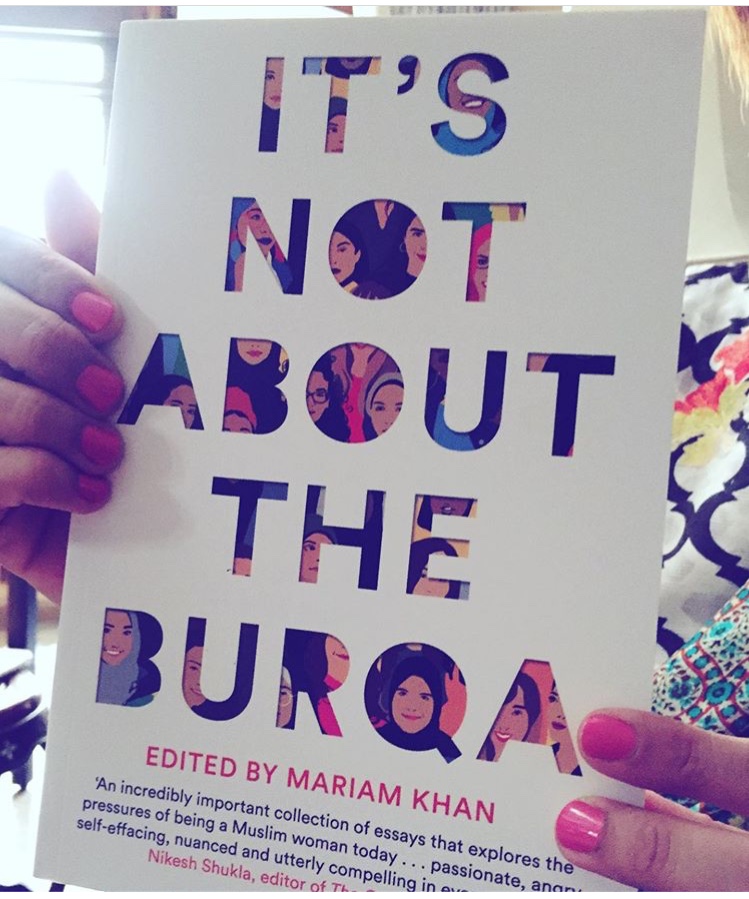
I managed to read three non-fiction books this year - Over Seventy by P.G.Wodehouse, It’s Not about the Burqa - Collected Essays, and The Sensational Life and Death of Qandeel Baloch by Sanam Maher. All three books were complete opposite of each other. 

Maher’s book on Qandeel Baloch was such a beautiful and sad read simultaneously. If you haven’t read it yet, I’d suggest you do. NOW. The essays in It’s Not about the Burqa were very intense and personal. Almost all of them gave a picture of how life is in the UK for a Muslim woman. Whether it is concerning their physical appearance or their right to marry whom they like - this book is a brave attempt at highlighting the voices of women. Kudos to all who contributed to it. 

Another book by a Pakistani author which was not just an enjoyable read but superbly written was Bina Shah’s, Before She Sleeps. The only unfortunate thing is that it isn’t available for sale in Pakistan and the only copy available was at the British Council Library. I think this might just be Bina’s best work. The plot was well constructed, the characters had depth and the dystopian setting was very, very believable. Loved it. 

Afternoon Raag by Amit Chaudhuri was, like all his books, a very pleasant read. It was as if I wasn’t reading but walking through a gallery, viewing one painting after another. The beauty of Chaudhuri’s work is that he doesn’t really provide you with a traditional story structure but invokes a mood, recreates a feeling. I followed it up with Desai’s, Baumgartner’s Bombay. A typical Desai novel full of good writing and keen observations. 

Another good read of the DWL Readers’ Club was Bird Summons by Leila Aboulela. It revolved around three Muslim women who embark on a road trip to see the final resting place of the first Scottish lady who embraced Islam. A road trip always promises an exciting story and the author didn’t disappoint. The ending wasn’t very convincing but the story was very involving and gave a good glimpse of how life is for devout Muslim women living abroad.

Diksha Basu’s, The Windfall, was a crisp read. It was very visual in its descriptions which is always good. The apartment building in Delhi East - its living conditions, the inhabitants and the dynamics they shared was probably my favourite part of the story. I thought I had the plot worked out but she gave a nice twist which left the story open-ended and quite believable. I think this book is already being made into a film. If not, it can totally be made into one. 

A book which has been adapted for television is Meera Syal’s, Life Isn’t all Hee Hee Ha Ha. I read it on Kindle even though I had noticed some copies of the book at local bookstores here in Karachi but I had dismissed it as chick-lit. Yes, I was a book snob once upon a time and no, I’m not proud of it. And I’m so glad I read it because it is a really, really good read. 

Jhabvala’s, Heat and Dust, was a re-read. I mainly read it to watch the film. FYI - an extremely decent version of the movie is available on YouTube starring Shashi Kapoor and Julie Christie. A Merchant Ivory production, the movie does total justice to the book but of course, the book is always better. 

The one book I read this year which has been rotting on my TBR pile is The Master & Margarita by Bulgakov. I really don’t know why I kept putting off reading this book because this book is a WORK OF ART. I purchased it in 2014 from a book store in Venice Beach and it has taken me five years to read it. If you haven’t read it, you must get your hands on a copy immediately. And don’t let others tell you that it’s an over-rated book. It isn’t. Ulysses is. Maybe even War and Peace (I'm ready to be roasted).

But if Russian authors aren’t your cup of tea then you can read An American Marriage by Tayari Jones. A basic plot with high drama and intense characters. I went through a number of conflicting emotions while reading it. It talks in a lot of detail about marriage, emotions and how we humans react to circumstances vs. how we are expected to react. Obama and Oprah are fans too. 

I also read Iris Murdoch’s, The Black Prince, this year. Mainly as 2019 was her birth centenary year. I’ve tried finishing this book earlier also but never got around to it. Somehow I managed to persevere this time around and I’m glad I did because Murdoch has this amazing way of writing where she does give you an ending but when you finish the book, you’re at a loss about who and what to believe. I love this about her books but I know this isn’t something which most people appreciate. 

What people want is a complete and ‘believable’ ending. Which is a bit unfair because isn’t the story the writer’s to tell? A lot of Elif Shafak’s fans didn’t like 10 Minutes, 38 Seconds in this Strange World. Or so we were told at the DWL Readers’ Club meet. This was the first book of hers I read and I loved it. This book resonated with me on so many levels that I didn’t want it to end. This is one of those books which will forever change your perception of Turkey. And it was also short-listed for the 2019 Booker Prize.

My Sister, the Serial Killer by Oyinkan Braithwaite was another Readers’ Club selection and was long-listed for the Booker Prize. The concept was interesting but it was a simple, light read. Nothing very memorable. Another book that wasn’t much home to write about was The Fix by Omer Shahid Hamid. Yet another very unimpressive read this year was, The Seven Husbands of Evelyn Hugo by Taylor Jenkins Reid. It was the most talked about book on Good Reads and I fell into the rating trap and downloaded it. It is a rags to riches story of a woman who goes from Hell’s Kitchen to becoming the biggest female star in Hollywood. There was a final twist in the book which I didn’t see coming but other than that, nothing much. A good read if you’re taking a long flight. 

I finished my 20th book last night and even though I’m drowning under social commitments at the moment, I’m trying to decide which book to start the new year with. Any suggestions?

What were your favourite reads of 2019? 

Monday, July 4, 2016

book shots


This was not a part of the 100 books challenge but a selection for the Desi Writers' Lounge Karachi Readers' Club. The book has just got published and we figured it will be a perfect read before we take a Ramadan break. 

As the title indicates, the book is about Mrs. Sharma and her shenanigans. A working woman in Delhi, she has to take care of ageing in-laws and keep an eye on her troubled teenage son while her husband is earning tax free income in Dubai for their 'better' future.

A chance encounter with a young man at the Delhi metro station leads to a series of events which, eventually and predictably, lead to disaster for our protagonist. 

An easy read which gives a sort of sneak peek into the lives of the marginalized in a big city.


Beanbagtales is on Instagram and I'm posting pictures of books recently read with mini reviews or 'book shots'. Some I'll share here on the blog. If you're interested in more clicks on the beanbag then simply follow on Instagram (I take quite decent pictures).

Image by: Me

Sunday, June 28, 2015

Murder, a counterfeit eye & courtroom drama in Book #2

Detective novels, good ones, don't just have twists and turns or gruesome, bloody murders on every second page. The backbone of a good detective novel is the protagonist, the hero who is, of course, the detective himself. Christie gave us Hercule Poirot, Chandler created Philip Marlowe, and Doyle gave us the greatest (probably) of all detectives in the form of Sherlock Holmes.

And Erle Stanley Gardner created the legal eagle, Perry Mason.

The first thing different about this murder mystery is that Perry Mason is a lawyer and not a detective. The plot is simple: there is a murder, a number of people are at the scene of the crime which looks like a suicide but isn't, family members come under suspicion, back stories are dug up, another murder happens which the reader didn't see coming, a big court scene, and finally the capture of the fleeing murderer. 

The title of the book is The Case of the Counterfeit eye and the eye (or eyes) pop up whenever murder happens in the book. And it is this title which made for this amazing cover which made it an irresistible buy. Erle Stanley Gardner was also a criminal lawyer. He wrote 82 Perry Mason novels and this one was number six and was published in 1935 (the last one was published in 1973). The Penguin edition that I have is called a Penguin Perry Mason.  All his novels started with 'The Case of......' and have such interesting titles as, The Case of the Singing Skirt,  The Case of the Glamarous Ghost, and The Case of the Negligent Nymph (for a complete list read here). 

This book was a 'just read-don't think' kind. Unlike Marlowe or Holmes, I didn't really warm up to Perry Mason. His character seemed too sure of himself and kind of one dimensional. By the end I was kind of put off by his arrogance. I'd like to see how the character was played out on the television drama Perry Mason. Sometimes an actor can add greater depth to a certain character in a novel (like Anthony Andrews did for the character of Sebastian Flyte in the Brideshead Revisited television series). 

The ending of the novel was in true Urdu digest style with Perry Mason providing us with a little teaser of his next case complete with a title! 

Image: Google

Sunday, June 21, 2015

A Far Cry from Kensington - Book #1

[I finished the first book and the reason there is no post to show for it is because I'm taking too much time on writing it. I always find writing the review of a Spark novel rather daunting so while I am working on that, I thought I'd share some gems from the novel.]

It being Ramzan I thought it'll be a good idea to share some dieting tips followed by the protagonist, Mrs. Hawkins, to lose weight and trust me when I say she had a LOT of it to lose. Here is how she describes herself in the opening chapter:

"I was massive in size, strong-muscles, huge bosomed, with wide hips, hefty long legs, a bulging belly and fat backside; I carried an ample weight with my five-foot-six of height, and was healthy with it."

She continues, "As an aside, I can tell you that if there's nothing wrong with you except fat it is easy to get thin. You eat and drink the same as always, only half. If you are handed a plate of food, leave half; if you have to help yourself, take half". 

How about we all follow this golden rule and so not fill ourselves senseless with fried food and carbonated drinks this Ramzan?

Monday, July 7, 2014

How real is The Real Life of Sebastian Knight?

When I was selecting books for the 15/15/30 project, I wanted to select female authors only, 2014 being the 'Year of Reading Women'. But I was short by three books (which was a reminder that I must read more female authors) and looking around the shelf in the last days before the challenge I came across this Nabakov novel which I'd just bought from States and I decided to add it to the reading pile along with Wodehouse and Thurber. 

It wasn't a good idea. 

Before I go on I want to make it clear that I have nothing against Nabakov. Some of his books are amazing reads (Laughter in the Dark, King, Queen, Knave) while others are a punishment (Pale Fire). I had great expectations from this book especially after reading the blurb, which started off saying:

'The Real Life of Sebastian Knight is a perversely magical literary detective story - subtle, intricate, leading to a tantalising climax - about the mysterious life of a famous writer'.

So I fell in the trap. Wouldn't you? 'Magical literary detective story', 'tantalising climax', 'mysterious life' and finally, 'famous writer'. All the ingredients that make a perfect read. But in reality it turned out to be a very odd sort of detective story with a climax which was far from tantalising about a writer who was not in the Rowling or Gaiman category. The blurb, however, failed to mention that this novel was partially autobiographical and full of nerdy chess references. 

The first mystery in this detective story is the detective/narrator who is the half brother of the dead writer Sebastian Knight. He has made it his mission to write a book on Knights' life although he has no experience in writing whatsoever. Besides love and admiration for his half-brother, what is driving our narrator to write this book? Guilt? Or a desire to set the record straight about his half-brother's life? We never really find out. While filling in the gaps, our narrator stumbles upon information about a 'femme fatale' who destroyed Knight - personally and professionally. The hunt for this wanton woman and the subsequent meeting with her provides some interesting moments in the book. The end was indeed 'baffling' and  far from being 'uniquely rewarding' as the blurb promised. 

Even though I couldn't understand a lot of references Nabakov was trying to make, the beauty of his prose did leave me in awe at some places. Also, his dark humour was very entertaining especially the summary of Knight's first novel, The Prismatic Bazel.

What I loved and laughed over the most was this perfect description of 'the whimsical wanton that ruins a foolish man's life'. 

'Books mean nothing to a woman of her kind; her own life seems to her to contain the thrills of a hundred novels. Had she been condemned to spend a whole day shut up in a library she would have been found dead about noon'.


This was Book #2 of the 15/15/30 project. For a review of Nabakov's 'King, Queen, Knave' read here


Tuesday, April 1, 2014

Finding the Perfect Protagonist

I made an elaborate reading plan last month and, wait for it, I managed to follow it also. Not completely because there are days when I'm just in the mood for 'a' particular book. Making a reading plan is good in some ways but it's okay to derail from it a bit otherwise reading just becomes a task....and not an escape from life and its many, many tasks. 

My choices last month were very varied. I read Greene's Brighton Rock even though I had every intention of starting reading all of his work in chronological order. But on a visit to Frere Hall I happened to find the book, Greene by Cedric Watts (published by Pearson Education), which was a sort of biography on him and it had a section on Brighton Rock so I dumped the chronology idea. Brighton Rock was unlike any Greene I've read so far. It was dark, and had very strong religious themes. Even though it was quite a thriller and read like a detective novel, it made me think and not just speculate (read: what's going to happen next). I think Pinkie is one of the most complex protagonist Greene has created. He is young, rash, arrogant and above all, a murderer. And even though you know he is the bad guy, right from the start, you feel differently towards him as you progress through the story. At least I did although I never really liked him at any point and it is very seldom that one hates Greenes' protagonist. 

The other planned choice besides Brighton Rock was Tales from a Vending Machine by Anees Salim. So this particular vending machine dispensed, like many other such gadgets, tasteless tea and coffee. But it is important in the narrative because it is manned by our young, beautiful, naive, ambitious and somewhat selfish protagonist, Hasina Mansoor. The reasons why she's stuck at a vending machine at the airport are the usual ones - father's shop is in loss and someone has to provide for the house and the education of her siblings. There is a love affair thrown in, a family feud and a horrible boss. The humor in the book helps...and there is a fabulous twist in the end. As the central character and the narrator, Hasina tries to make the reader like her or atleast sympathize with her. I have to admit that there were a few moments when I did feel sorry for her like when her boss invited her to his granddaughter's wedding, much to Hasina's delight & surprise, only to make her stand at the beverages stall. Overall she wasn't very likeable.

At this point, I was feeling rather sad with my choices. There was no one to root for in my last two reads. Not one character. It was distressing. 

And then, even though I had promised myself I won't read any of his books this year, I turned to Gaiman.

In my defense, it was a last minute decision. As I rushed out of my room to make it to a very important interview I picked The Graveyard Book from the shelf....... 

.......and I found not one, but two characters who made me wish I had them as friends. 

Maybe I do. 

Images: Google