Showing posts with label Books&Authors. Show all posts

Wednesday, April 22, 2020

Post # 12 - 'The Girl Who Saved Christmas' filled me with hope to bursting point

Hope. It’s an emotion we all experience everyday. Or almost everyday. A simple Google search of this four letter word brought up many definitions/meanings.

“…a feeling of expectation and desire for a particular thing to happen.”

“ Hope is an optimistic state of mind that is based on an expectation of positive outcomes with respect to events and circumstances in one's life or the world at large.”

Never has the world collectively hoped for the same things. Hope that people suffering from the virus will recover. Hope that this virus will spare us, our loved ones, our country. Hope that the old ways of life and living will return soon. Hope is a powerful emotion. It is uplifting and maybe, who knows, magical too. 

Even though hope is a powerful feeling that carries a lot of positive connotations, it is a little hard to come by in this crazy time. Locked in our homes, away from our loved ones, living a life which we had only ever come across in books or movies - it is tough to feel hopeful. When ever I’ve found myself spiralling down into the ‘rabbit hole’, I have turned to books. No matter what my state of mind may be at a given time, I always believe that there is a right book which will help me, alleviate me, motivate me or fill me with gratitude and hope. 

I did find myself going a bit over the edge a few days back. There were the usual signs - agitation, a sinking feeling in the stomach, spurts of anger and a longing for things to be different. I knew I had to find my next read quickly and that, too, something which was buoyant and uplifting. While searching through my book shelves for the ‘right’ read, I picked up and put down many books - a collection of essays by Zadie Smith, Slaughterhouse 5 and even, The Hobbit. Just as I thought I’ll have to fall back on my usual book saviour, P.G. Wodehouse, I came across this lovely book which my niece had gifted me last year around Christmas and I instantly knew that this book was going to save me. 

This is the second book in the Christmas titles by Matt Haig. My very first book by Matt Haig was The Humans which I read only because it was a selection for our Karachi DWL Readers’ Club. Haig is not an ordinary writer though his writing might come across as simple. He is one of those writers who keep you glued to the story so that you just can’t help but finish his book. Also, I feel, there is an element of crazy in his work which has made me read other novels by him. Most of his books, even the ones based on vampires (The Radleys), are oozing with hope and good cheer. Writing, I think, is an outlet for Haig to deal with his own depression and anxiety. I’ve read his books in times of mild distress (A Boy called Christmas  - when I was trying to conceive. The Radleys - during my pregnancy and The Girl who saved Christmas - now) and they’ve always brought a smile to my face. It sounds a bit cheesy but trust me, his writing has the power to improve one’s mood unless you’re a total snob about books. 

Happy, or something close to it, is what we need to be at the moment as the world stands at the brink of collapse and everyone hopes for a miracle. A miracle is what the ten year old Amelia Wishart, the protagonist, wished and hoped for too. Her mother died on Christmas eve and she was taken, by force, to a workhouse. Alone, orphaned and friendless, her only hope was Father Christmas. Unfortunately, Elfhelm, where Father Christmas lived amongst the elves, was facing a crisis too. Trolls attacked the elf town on Christmas eve, even though they had agreed on a peace treaty (sound familiar?) and Christmas had to be cancelled. Though Father Christmas got Amelia’s letter and that of many other children, he didn’t possess magic, toys and the sleigh to carry out his job. With Father Christmas thus restrained, Amelia’s wish remained unfulfilled and she stopped believing in magic, in goodness and even in Father Christmas.

“She realised that this world, and everything in it, belonged to men. Except Queen Victoria. The only way to be female in this world, Amelia thought angrily, was to have a crown on your head. Because really the world was run by men. Cruel, unthinking men who didn’t and would never care about the wishes and hopes of a ten-year-old girl like her. Men like Officer Pry. Men like Mr. Creeper. Men who thought they were doing good but who were really doing harm. And yes, even Father Christmas. Yes, especially him. Father Christmas had made children believe in magic when actually a lot of life was very unmagical.”

Hope has a strange, resilient power. Even if a smidgen of it exists in the world, it can make a difference. Don’t lose hope is a phrase oft repeated. Sometimes it might sound hollow and superficial but it is anything but that. Things do work out for the better even if they take some time. In Amelia’s case, it took an entire year for her life to turn around. For it was only after a year that Father Christmas was able to deliver toys to the children around the world on Christmas Eve and Amelia was first on his list. However, he didn’t know the change in her circumstances and address (since there wasn’t any Google in London during Victorian Times) and thus had to conduct an almost door-to-door search for Amelia. He had quite an adventure of it too as he met the young Queen Victoria (owing to his sleigh crashing through the window of her room in Buckingham Palace) and a young Charles Dickens. In fact, it was Father Christmas who suggested that Dickens write a book on Christmas. Fancy that!

Charles Dickens and Father Christmas
‘I have been sitting upstairs at my desk every day for five weeks trying to think of a new story, but my mind is barren and empty. I’ve been getting the mobs. People liked my last story a lot and now I worry I will never be able to write another. Presently, my mind is as foggy as the River Thames in March. I have no idea what to write about next. 

Father Christmas smiled. ‘Christmas! You should write about Christmas!’

‘But it takes me months to write a book. How could I write about Christmas in, say, March?’

‘Christmas isn’t a date, Mr.Dickens. It’s a feeling.’

Father Christmas saw the writer’s eyes light up like windows at night. ‘A Christmas story? That’s not such a bad idea!’

What follows after these two encounters is some hard core action which I’ll leave the reader to discover himself/herself.

This book has everything to uplift one’s mood. Christmas and all the joy it brings is, indeed, a feeling because even though it’s April, I felt all warm and fuzzy with hope and joy. Another uplifting feature of the book are the strong female characters. Amelia, who never gave up hope that she will escape from the workhouse, with or without outside help. Mary, the kind woman at the workhouse who added sugar into the food or ‘slop’ to make it a bit better for the young kids who worked there. The young Queen Victoria who extended all her help to Father Christmas although he crashed into her room with reindeers in the middle of the night. But humans aren’t the only impressive characters in the story. There is the elf Noosh who is a doting mother, a journalist and a conscientious citizen. Also the Truth Pixie who always tells the truth no matter what the consequences and helps Noosh uncover some interesting facts about the Troll attack on Elfhelm. 

Books have power. Some more than others. This isn’t a book that will change your beliefs or cause a revolution or make you start believing in magic. What it might do, like it did for me, is uplift your mood. It might also make you realise that even though sometimes all hell breaks loose, things do get back to normal (in some cases, even better than normal). It just takes some time. The important thing is not to lose hope and remember that there is no impossible. 

Wednesday, March 11, 2020

Post # 7 - The Books We Hide

Or rather, the book covers we hide. A few years back I bought a copy of Simone de Beauvoir’s, She Came To Stay. The cover featured a nude girl and I remember the shocked expression of a young kid standing next to me when I picked up the book and started reading the blurb. Even I was kind of surprised by the cover because why would a book by Beauvoir need a naked woman? To entice a reader unfamiliar with her work? Someone who picks a Beauvoir book for the cover alone will be massively disappointed because racy is one thing her books are not. 

But what happens when you take out a book from your bag with a naked woman on the cover? Others who happen to glance in your direction assume you’re reading porn. So, what do you do? Cover the book with an old newspaper or wrapping paper or calendar? Which makes it all the more obvious that you’re reading something fishy.

While growing up I came across many calendar covered books in our house. My mother had this rather large collection of Mills and Boon and Barbara Cartland novels and the covers usually had illustrations of buxom women swooning in the muscular arms of tanned, chiseled men. With three curious children roaming around in the house, she made sure the books were always covered by some calendar or wrapping paper. Was she afraid that the covers might make me start reading the books? I never did - not even in university when I had easy access to it through my friends. They, too, always had the novels covered up in paper as they stuffed them quickly into their bags while there weren’t other students around. 

Why didn’t I read these racy novels? Was I trying to prove my literary prowess over others around me? Unfortunately, yes. College and university days are so demanding at so many levels and I felt (and this seems so dumb now) that I could impress others through my books. And if you cover up a book, there isn’t any chance of impressing anyone, is there?

I have, thankfully, outgrown this philosophy and after years of being a book snob have finally come round to reading books which are not in my comfort zone. The DWL Readers’ Club (which I moderate) played a big role in making me reach for books I otherwise never read. Also, I do a lot of my reading outside the house on my Kindle which again, most conveniently, does not display the book I'm reading to the world. 

Times have changed. Social media has made the entire globe our audience and now with a simple click we can share our current read with almost everyone everywhere. The more controversial the read, the better. It might differ from culture to culture and household to household but things which were kept hidden or low key are displayed openly to the world. There was a time in Pakistan when writers like Manto faced trial for obscenity and vulgarity in their writings. Fast forward to the not distant past when book stores around the country openly displayed and sold the Fifty Shades of Grey series. Ironic, no? 

Whether you like to show the world what you’re reading or you’re hiding it from prying eyes or better still, reading on your phone/tablet/kindle, the important thing is that you’re reading. And at the end of the day, that is the ONLY thing that matters!

Monday, February 10, 2020

Post # 4 - How Do I Love Thee? Let me count the books..

What are the best love stories? The ones in which star crossed lovers overcome all obstacles and fall into each other's arms? Or the ones steeped in tragedy where ‘never the twain shall meet.’

Going over my book shelves to pick out my favourite romantic reads made me realise that the greatest love stories usually had tragedy written all over them. Which is, I believe, what makes them enduring and impactful. And if you’re a reader and happen to fall in love, these stories will make you appreciate what you have even more. Maybe. 

True love is hard to find. These books which I’m going to talk about here, briefly, reflect this. But oh, what joy love brings to one’s life even if it is not forever. To have loved once with all your being even if it is not meant to be changes you. Sometimes for the better and other times, like Heathcliff, for the worst. And no, Wuthering Heights is not on this list. 

Love that came too late - The End of the Affair (Graham Greene)

This novel is considered to be one of Greene’s best works and it is a really beautiful, yet tragic love story. The protagonist, Maurice Bendrix, a writer, falls in love with the lovely Sarah, the wife of a boring, regular civil servant, Henry. The lovers have their secret trysts but even though they are madly in love, Sarah refuses to divorce her husband. Bendrix is jealous and obsessive about his love and his struggle with his emotions is really annoying at times. 

The story is set in the backdrop of WWII and when a bomb drops on the apartment block where Bendrix lives, their lives change forever. The affair comes to an abrupt end without any explanation from Sarah which drives Bendrix crazy. Do the lovers ever get to make up? Does Bendrix move on from Sarah’s unfortunate death? There are some moments of real tenderness in this novel, but it becomes a bit preachy towards the end.

“It's a strange thing to discover and to believe that you are loved when you know that there is nothing in you for anybody but a parent or a God to love.”

This was one of Greene’s last Catholic novels (the others include Brighton Rock, The Power and the Glory and The Heart of the Matter). 

For a romantic read with plenty of heartbreaking scenes, this book gets four stars from me. The 1999 movie starring Julianne Moore and Ralph Fiennes is also highly recommended. 


Where love lost to religious beliefs - The Thorn Birds (Colleen McCullough)

There are some books which are physically painful to read. This was one of them. I think it was because I read it when love, the kind experienced by Ralph and Meggie,  seemed like a distant reality and not something that exists beyond books and movies. Ralph is a Catholic Priest and this prevents him from marrying Meggie and this battle between love for her and love for his Lord is agonising for the reader. As a woman, I had no sympathies for Ralph. He wasn’t true to the woman he loved nor to his God. She was resolute in her stand and refused to see justice in his arguments. The ending just makes you cringe at the irony of life. What doesn’t make you cringe is the television series where Ralph is played by the very charming Richard Chamberlain.

This is a very intense love story but it’s also a great novel about family relationships, especially those between siblings. Meggie is headstrong and stubborn but these qualities help her to survive through a bad marriage and other tragedies. It’s a lovely book but a long one. I don’t usually say this but I think you’ll be better off watching the television series which is quite true to the novel.

Another novel which fits this category is Brideshead Revisited by Evelyn Waugh. Catholicism is a significant theme in the book. The protagonist, Charles Ryder, is in love with Julia Flyte, the daughter of Lord Marchmain and the owner of the palatial house known as Brideshead Castle. Julia and Charles, though always fond of each other, form a romantic relationship after their respective failed marriages. Religion, though, came in the way of their union. Julia, moved by her father’s last minute return to his Catholic faith on his death bed, takes a step which will make you, dear reader, stare at the book and probably at the walls of the room in disbelief. The only way you can come to terms with the strange, not happily ever after, ending of the book is to watch the 1981 British Television production of the novel. The ending remains the same but watching a young Jeremy Irons in the role of Charles Ryder is a visual delight. 


Where love triumphed over cultural, societal, racial, personal and other complications- The Far Pavilions (M.M.Kaye)
When I added this book to the list, I immediately wanted to re-read it. This is a love story that I never get tired of reading. I knew of this book through the television series which seemed to be on every video cassette my parents had. This was the time before the internet and usually if you liked a favourite series, you recorded it on a VHS which was played on this extinct instrument known as the VCR. 

I’ve re-read this book countless times since I first finished it in my late teens and I’ve never got tired of Anjuli and Ash’s love story. It is a love which is not meant to be and yet overcomes all obstacles and survives everything. It really does! Set in India during the time of the British Raj, this novel take you through the length and breadth of India. From the mountain top palace of the Maharaja of Gulkote, to the barracks of the Corps of Guides and to Kabul  - this love story of Ash and his Anjuli will transport you into a different world. 

That television series I mentioned of the book? Skip it. Read the book. 

Modern Love - Juliet, Naked (Nick Hornby)
"One thing about great art: it made you love people more, forgive them their petty transgressions."

At first glance this book might not appear to be a love story but it is just that. And it isn’t just about finding true love but accepting that one can outgrow love especially if it becomes suffocating and restricting. Annie is in just such a relationship with her long time boyfriend, Duncan, who is obsessed about a rockstar, Tucker Crowe and his music. When a new acoustic unheard of version of Crowe's album, Juliet, comes out Annie and Duncan's relationship takes a U-turn. 

A chance email to Crowe changes Annie’s life forever. It is amazing how two people from completely different walks of life, and completely different continents, can come together so easily. It is a very unconventional romance in a lot of ways but what I liked about it most was how we can stumble upon love when a) we least expect it and b) when we’re not in the prime of our youth. It’s a book that makes you realise that love is a complicated emotion but when you really, truly find it, you better hold on to it real tight. 

Love in Real Life - The Course of Love (Alain de Botton)
This book takes up the story from ‘happily ever after’. Boy meets girl. They fall in love. They get married and have children. Is this a love story? Yes, it is very much so. Especially if you’ve been married for five plus years. 

"A marriage doesn't begin with a proposal, or even an initial meeting. It begins far earlier, when the idea of love is born, and more specifically the dream of a soulmate."

Rabih and Kristen are like any other couple. An exciting courtship period where infatuation is at its peak and every prospect pleases. Once the magical honeymoon is over and life settles into its routine is when the power of their love is truly tested. Through the ups and downs experienced by Rabih and Kristen over the many years of marriage and togetherness, the message comes through that love is not only an experience but a skill which needs to be learned and honed and adapted to changing needs and the pressures of the outside world. It’s not your regular romance novel and at times it does seem a bit preachy but if you’ve read the author’s, Essays in Love, you will love this book. 

This crazy thing called love...

Love isn’t simple. It is exhilarating, uplifting, heartbreaking, disappointing, powerful, and yet at the same time, a feeling that can make a person feel like jelly. The greatest love stories, I believe, are the ones which can make us experience falling in love, all over again. Some of these and others have made me cry and laugh and feel warm and fuzzy all over. Which are your favourite love stories?


Note: All images in this post are by the author. 

Thursday, January 16, 2020

Post # 2 - Read & Review: The Testaments

17th Jan 2020 

Still reading. Didn't get the chance to finish it yesterday or maybe I didn't have the courage? 

16th Jan 2020 - 10:10am

I’m on page 340 so I’m more than halfway done. I’ll probably finish the book today because it has reached a point where there is too much at stake and I need to know how it ends. Does Gilead survive? Does Aunt Lydia’s scheme work? Do Agnes and Nicole get reunited with their mother?

The thick hardcover is lying next to me on the desk as I write this. Why am I not reaching for it? Honestly, I’m a bit afraid. What if there is no happy ending which, knowing Atwood, is not a given. That will be very disappointing. Especially when I have invested myself in the story so much (I read The Handmaid’s Tale before I started this book). 

Just like Orwell did in 1984, Atwood creates a world which is so believable it’s almost scary. I don’t think I have the courage to watch the television series of The Handmaid’s Tale. Seeing the story come to life on screen will probably be heart wrenching. 

More on the book later. 

21st Jan 2020

I finished the book on 16th only and decided to think about it for a bit before posting my views. It was a great book. The plot was perfect, the characters were extremely well done and believable. The connections with The Handmaid's Tale were there and I'm so glad I read it. How did I feel when I finished the book? Relieved but a bit confused also. Why did this book win the Booker Prize? It was a cross between literary fiction and a suspense novel and also, it had a really filmi ending. It's as if she has written this book keeping in mind that it will be made into a movie or television series. I'm not saying it wasn't a great read. Maybe not as haunting and disturbing as The Handmaid's Tale, but a good story. Now let's see what the verdict is at the DWL Karachi Readers' Club.  

Friday, December 27, 2019

Post # 31 - 2019 in books

This post is a long one. You've been warned. 

Last year I just managed to read six books even though I had set a lofty goal of reading a 100. Actually a 100 books in 365 days is totally do-able if you don’t have twins and Netflix. This year I decided to work around the twins and other entertainment/commitments and set a simple goal (as suggested by my bestie) of reading ten minutes everyday. The result was that I managed to finish 20 books! I know some of you will scoff at this meagre number while others will shake their head in disbelief that I even got into double digits but one can’t please everyone. 

A few books were re-reads, some of them were selections of the DWL Karachi Readers’ Club and some were from my TBR pile. So I started the year with Hanif’s latest book, Red Birds. Let’s just say that I liked his previous two books more than this one and leave it at that. Milkman by Anna Burns came next and this book was AMAZING. It was set in Ireland during The Troubles in the 70s and even though the story was about harassment, the war was weaved into it superbly. 

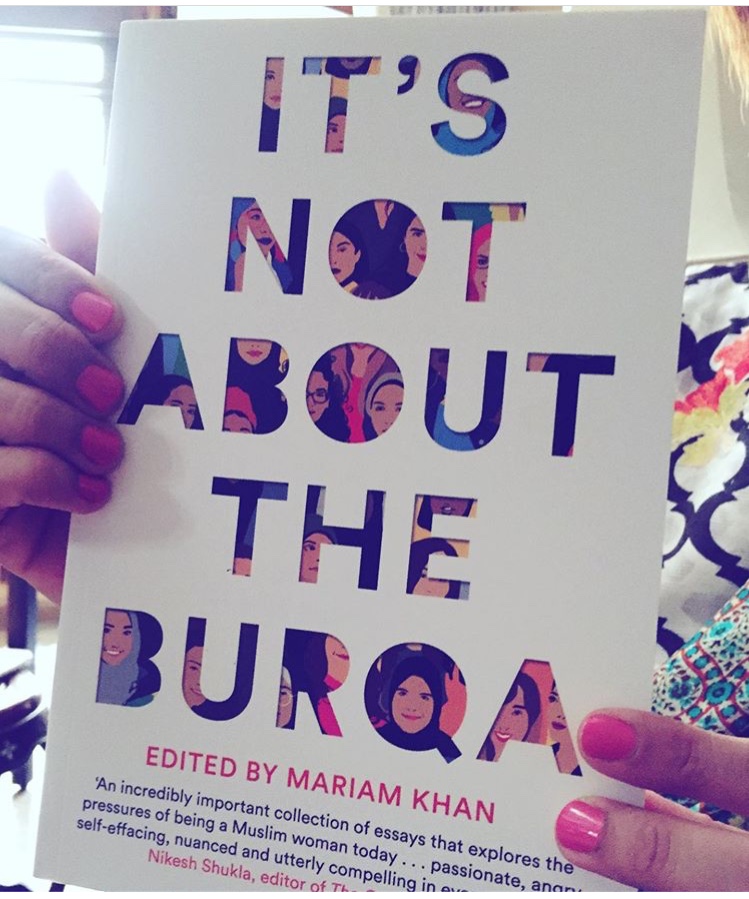
I managed to read three non-fiction books this year - Over Seventy by P.G.Wodehouse, It’s Not about the Burqa - Collected Essays, and The Sensational Life and Death of Qandeel Baloch by Sanam Maher. All three books were complete opposite of each other. 

Maher’s book on Qandeel Baloch was such a beautiful and sad read simultaneously. If you haven’t read it yet, I’d suggest you do. NOW. The essays in It’s Not about the Burqa were very intense and personal. Almost all of them gave a picture of how life is in the UK for a Muslim woman. Whether it is concerning their physical appearance or their right to marry whom they like - this book is a brave attempt at highlighting the voices of women. Kudos to all who contributed to it. 

Another book by a Pakistani author which was not just an enjoyable read but superbly written was Bina Shah’s, Before She Sleeps. The only unfortunate thing is that it isn’t available for sale in Pakistan and the only copy available was at the British Council Library. I think this might just be Bina’s best work. The plot was well constructed, the characters had depth and the dystopian setting was very, very believable. Loved it. 

Afternoon Raag by Amit Chaudhuri was, like all his books, a very pleasant read. It was as if I wasn’t reading but walking through a gallery, viewing one painting after another. The beauty of Chaudhuri’s work is that he doesn’t really provide you with a traditional story structure but invokes a mood, recreates a feeling. I followed it up with Desai’s, Baumgartner’s Bombay. A typical Desai novel full of good writing and keen observations. 

Another good read of the DWL Readers’ Club was Bird Summons by Leila Aboulela. It revolved around three Muslim women who embark on a road trip to see the final resting place of the first Scottish lady who embraced Islam. A road trip always promises an exciting story and the author didn’t disappoint. The ending wasn’t very convincing but the story was very involving and gave a good glimpse of how life is for devout Muslim women living abroad.

Diksha Basu’s, The Windfall, was a crisp read. It was very visual in its descriptions which is always good. The apartment building in Delhi East - its living conditions, the inhabitants and the dynamics they shared was probably my favourite part of the story. I thought I had the plot worked out but she gave a nice twist which left the story open-ended and quite believable. I think this book is already being made into a film. If not, it can totally be made into one. 

A book which has been adapted for television is Meera Syal’s, Life Isn’t all Hee Hee Ha Ha. I read it on Kindle even though I had noticed some copies of the book at local bookstores here in Karachi but I had dismissed it as chick-lit. Yes, I was a book snob once upon a time and no, I’m not proud of it. And I’m so glad I read it because it is a really, really good read. 

Jhabvala’s, Heat and Dust, was a re-read. I mainly read it to watch the film. FYI - an extremely decent version of the movie is available on YouTube starring Shashi Kapoor and Julie Christie. A Merchant Ivory production, the movie does total justice to the book but of course, the book is always better. 

The one book I read this year which has been rotting on my TBR pile is The Master & Margarita by Bulgakov. I really don’t know why I kept putting off reading this book because this book is a WORK OF ART. I purchased it in 2014 from a book store in Venice Beach and it has taken me five years to read it. If you haven’t read it, you must get your hands on a copy immediately. And don’t let others tell you that it’s an over-rated book. It isn’t. Ulysses is. Maybe even War and Peace (I'm ready to be roasted).

But if Russian authors aren’t your cup of tea then you can read An American Marriage by Tayari Jones. A basic plot with high drama and intense characters. I went through a number of conflicting emotions while reading it. It talks in a lot of detail about marriage, emotions and how we humans react to circumstances vs. how we are expected to react. Obama and Oprah are fans too. 

I also read Iris Murdoch’s, The Black Prince, this year. Mainly as 2019 was her birth centenary year. I’ve tried finishing this book earlier also but never got around to it. Somehow I managed to persevere this time around and I’m glad I did because Murdoch has this amazing way of writing where she does give you an ending but when you finish the book, you’re at a loss about who and what to believe. I love this about her books but I know this isn’t something which most people appreciate. 

What people want is a complete and ‘believable’ ending. Which is a bit unfair because isn’t the story the writer’s to tell? A lot of Elif Shafak’s fans didn’t like 10 Minutes, 38 Seconds in this Strange World. Or so we were told at the DWL Readers’ Club meet. This was the first book of hers I read and I loved it. This book resonated with me on so many levels that I didn’t want it to end. This is one of those books which will forever change your perception of Turkey. And it was also short-listed for the 2019 Booker Prize.

My Sister, the Serial Killer by Oyinkan Braithwaite was another Readers’ Club selection and was long-listed for the Booker Prize. The concept was interesting but it was a simple, light read. Nothing very memorable. Another book that wasn’t much home to write about was The Fix by Omer Shahid Hamid. Yet another very unimpressive read this year was, The Seven Husbands of Evelyn Hugo by Taylor Jenkins Reid. It was the most talked about book on Good Reads and I fell into the rating trap and downloaded it. It is a rags to riches story of a woman who goes from Hell’s Kitchen to becoming the biggest female star in Hollywood. There was a final twist in the book which I didn’t see coming but other than that, nothing much. A good read if you’re taking a long flight. 

I finished my 20th book last night and even though I’m drowning under social commitments at the moment, I’m trying to decide which book to start the new year with. Any suggestions?

What were your favourite reads of 2019? 

Friday, March 8, 2019

Straight from the book - Afternoon Raag

When one remembers a scene from the past in which one is with a loved one who is now dead, it is not like a memory at all, but like a dream one is having before his death, a premonition. In this dream which precedes death, the person is tranquil and happy, and yet, without reason, you know he is to die. When we recall the dead, the past becomes a dream we are dreaming foretelling death, though in our waking moments we cannot properly interpret it or give it significance. My memory of the day I bought the tanpura with my guru is like such a dream. 

(Afternoon Raag - Amit Chaudhuri)

Thursday, February 23, 2017

au revoir classics!

A reason to do the 100 book challenge is to reduce my ever increasing TBR pile. The largest number of unread novels in this pile are classics. Flaubert, Balzac, Sartre, Stendhal, some Chekov, some Dostoevsky and many others. Whenever I decide to reach out for any one of them, I find myself gravitating to some other book and they remain untouched.  

So yesterday, after much hesitation, I picked up Flaubert's book, Sentimental Education. A young man in love with a married older woman seemed an interesting enough plot. The introduction by the translator was promising too with hints of an outrageous ending. Thirty pages in and all I wanted was to put it right back on the shelf. I even considered donating the whole lot but the thought of empty shelves was a bit disconcerting so I abandoned the idea, for the time being at least. 

But why did I feel this way towards this great writer? Was it the language? Was I not able to relate to the setting or the time period? I dismissed the latter as irrelevant because it is always the story which pulls you into the novel no matter what the setting or the time period. I mean, we've all practically grown up on Enid Blyton novels where usually the kids did stuff which was completely alien to us. Drinking tea at 4pm and having cucumber sandwiches was never a part of MY lifestyle while growing up!

It seems a bit silly but this recent aversion to classics was really bothering me. So I put this question to two bibliophile friends today and one of them simply said, “Life is too short to waste on books you don’t want to read. If you don’t feel like completing a book, don’t. There are so many other good books out there.” 

Now you might not agree with this but it makes SO MUCH SENSE! Why read something which doesn’t excite you, interest you or is unrelatable? Books are an escape. We inhabit another world when we read and it takes our mind off reality for a while. A good book is one which engages you at such a level, you don’t want to come back to reality! And at this point, classics are definitely not doing that for me. 

So with a spring in my step and a light heart, I place the Flaubert back on the shelf. The hunt for a new book begins!

Monday, June 6, 2016

Save your story from pneumonia

"Write to please one person. If you open a window and make love to the world, so to speak, your story will get pneumonia."

(Kurt Vonnegut Jr.)