Wednesday, July 27, 2011

Enter the World of Suspense - Jassosi Dunya

Enter the world of Jassosi Dunya - ' an intricately demented world of larger than life villains, mad genius detectives, and beautiful femme fatales,' 

These lines are from the blurb of the English translation of Ibn-e-Safi's book from his Jassosi Dunya novel. Who is Ibn-e-Safi? To many in the subcontinent he is the creator of memorable characters like Imran and Faridi who featured in books full of suspense, mystery, adventure and romance. 

I have, unfortunately, not read a single one of his 116 novels in the Imran series or the 125 novels in the Jassosi Dunya series. I got hooked onto the great dastaan (story) of Tilsm Hoshruba at the tender age of eleven and thus, ignored Ibn-e-Safi. In my teenage years I read Asfaque Ahmed's Inspector Jamshed's series which was very entertaining, and unlike Ibn-e-Safi's books, easily available at bookstores. 

So after all these years, what made me think of Imran series again? Hubby dear and myself happened to stumble upon an English translation of one of his books. We did buy the book but why read a translation when we know the original language and thus began my quest to read all the books in the Imran series. And what better time to start than July, the month of his birth and death anniversary. 

I'm not sure how I'll go about this reading project but I have to read all of the Imran series books first and get hold of their artworks too. In case you are an owner of one of these books, and don't want them, please feel free to donate. And if you're a fan, join in. Read the novels with me (will post details soon) and leave the link of your blog/review in the comments section. Let's revive the work of this legendary Urdu writer.

Images: Google 

Friday, July 15, 2011

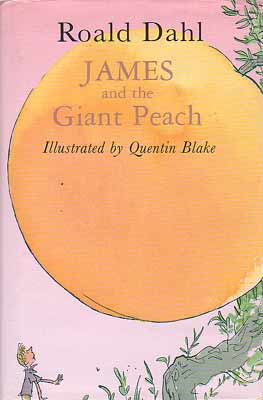
James and the Giant Peach - 50 years and counting!

An orphan boy accompanied by a grasshopper, a centipede, a glow-worm, a spider, a silkworm, a lady bird and an earthworm cross the Atlantic Ocean atop a giant, juicy peach. This crazy mix of characters features in Roald Dahl’s James and the Giant Peach, and this year marks 50 years of its publication.

For a book to remain in publication for 50 years is no small feat. But what is it about James, his friends and the giant peach that has entertained children (and their children!) around the world for 50 odd years? All great books share one common thing; a powerful story. The story and its ability to resonate with the reader is what makes a book, well, immortal!

And this book has exactly that, a powerful story. James Henry Trotter, the protagonist, is an ordinary boy. He lives happily with his parents in a beautiful house near the sea. Life is perfect for little James till the day when his parents, while on a visit to London, get eaten by an angry rhinoceros who has escaped from the zoo. The very absurdity of this accident lends it humor although, for a child, it is somewhat scary. 

Alone in the world, James ends up living with his villainous aunts -Aunt Sponge and Aunt Spiker. In almost all of Dahl’s books, the characters, and especially the villains, are very strong. Their personalities reek of evil; their looks, actions and manners of speech all spell BAD GUY. There are some amazing villains in literature and many in Dahl’s own writings but none are so mean, ego-centric, greedy and repulsive as Aunt Sponge and Aunt Spiker.

“Aunt Sponge was enormously fat and very short. She had small piggy eyes, a sunken mouth, and one of those white flabby faces that looked exactly as though it had been boiled. She was like a great white soggy over boiled cabbage. Aunt Spiker, on the other hand, was lean and tall and bony, and she wore steel-rimmed spectacles that fixed on to the end of her nose with a clip. She had a screeching voice and long wet narrow lips, and whenever she got angry or excited, little flecks of spit would come shooting out of her mouth as she talked”.

Quite ghastly aunts!  

James spends three long, miserable years with his aunts. During all this time he is not allowed to meet or play with any other children or go to school. He can’t even accidentally bump into another child because his aunts live on top of a hill where no one happens to drop by (sounds pretty draconian!). One fine day, when James is feeling awfully miserable, an old man in  'a funny dark-green suit' gives him a bag full of magic beans along with lots of instructions. He promises James that on swallowing the beans "marvellous things will start happening to you, fabulous, unbelievable things - and you will never be miserable again in your life". If only beans could actually do that!

Magic turned James’s life topsy turvy, quite literally. The peach was his magic lamp and genie in one and along with his insect friends, James escaped from his horrid aunts and their “queer ramshackle house on top of a high hill in the south of England”. Along with him escape seven creatures of the soil, which came across the magic beans, and on swallowing them, became the same size as James. They included the musical Old-Green-Grasshopper, the nine spotted Ladybird, the emotional Miss Spider, the timid Silkworm, the quiet Glow-worm, the ego-centric Centipede and the blind Earthworm. The relationship between the insects, especially the centipede and the earthworm is very amusing. Each creature uses his/her ability to protect the peach and themselves from danger which includes a shark attack and an awful row with the cloud men.

But all’s well that ends well and after a very adventurous journey across the Atlantic Ocean, the peach and co. land smack in the middle of New York, on an “enormous silver needle sticking up into the sky” (the Empire State Building). They become heroes and spend the rest of their lives, happily ever after, in New York.

USA is the happy land where James and his friends lead their lives as heroes. UK, on the other hand, is the land of the villains, Aunt Sponge and Aunt Spiker, which they leave behind forever. After reading Roald Dahl’s biography, this doesn’t appear strange because Dahl, himself, had a soft spot for New York. As a young RAF officer, during World War II, he was posted in New York where he made many friends and rubbed shoulders with the high and mighty. As a writer, too, he found support and fame in America before United Kingdom. 

Even though it is a book for children, I loved re-reading and listening to the audio book narrated by Andrew Sachs. There are many things you can take from the book no matter which age you are. James is an amazing boy. Maybe it is his misfortune which shapes him into a compassionate young fellow who is not just intelligent but brimming with optimism. His innovative solutions and readiness to help others is very admirable, especially in a seven year old. His friends, too, are pretty amazing creatures. This just goes to show that friends can come in any shape or size, but as long as they’re at your side through thick and thin, it doesn’t really matter what their color/race/creed/status is. And of course, never stop dreaming because dreams do and can come true. All it needs is a lot of belief and a little bit of magic!

Images: Google

Monday, June 27, 2011

The Picture of Dorian Gray - a Review


The Picture of Dorian Gray was one of the books which I was itching to read. I’ve read a bit of Oscar Wilde (The Importance of being Earnest, An Ideal Husband) but it was this novel, his only one, which I wanted to get my hands on. I found it quite disappointing.

The story is pretty straightforward; Dorian Gray, described as ‘this young Adonis, who looks as if he was made of ivory and rose-leaves’ sits for a portrait for his painter friend, Basil Hallward. This life-size portrait is a striking image of the beautiful young man but it distresses Dorian and he makes a wish, a Faustian bargain. His wish is to retain his eternal youth, to remain unscathed by the ravages of life while his portrait bears the brunt of old age.

And so it happens. Dorian befriends Lord Herny Wotton, a friend of Basil Hallward, who quite unintentionally has a bad influence on the young man. Dorian takes in his words quite literally and makes them a sort of bible for his actions. “That is one of the great secrets of life – to cure the soul by means of the senses, and the senses by means of the soul” (Lord Henry). In gratifying his senses, Dorian loses sight of all morals and adopts a debauched lifestyle. But the excesses of his lifestyle leave no mark on his demeanour because according to the wish, it is Dorian’s portrait that must bear the brunt of his wrong doings.

1945 Film Poster
The book reads like a suspense/mystery novel; I read the novel at breakneck speed to find out the end. It did become a drag in some places, especially when Lord Henry or Basil Hallward decided to deliver sermons, greatly varying in nature, to Dorian Gray. We know, from the author’s description of the portrait from time to time, of Dorian’s evil ways but their exact nature is never revealed. Does Wilde leave it to our imagination? Or are we supposed to keep Wilde’s own life in mind while reading the novel?

The hero of the novel is the portrait – its fate is what interests the reader most. How does each wrong act of Dorian Gray affect the portrait? It is the sinister nature of the portrait that, I believe, has made The Picture of Dorian Gray a popular novel.

Thankfully, such wishes are not granted, otherwise most people in Pakistan will have their portraits done. 

Photographs: 1945 film poster (Google Images)

Tuesday, June 14, 2011

Wonder Woman in Dubai!

I've been very lazy in taking pictures but today's buy inspired me to take out my camera (about time too!) and snap away. My absolute buy of the holiday are these books, which include The Postman Always Rings Twice (James M.Cain), Like Water for Chocolate (Laura Esquivel), The Bloody Chamber (Angela Carter), Pale Fire (Vladimir Nabakov), What We Talk about when We Talk about Love (Raymond Carver), Time's Arrow  (Martin Amis) and the absolutely stunning Wonder Woman bobble head!


Sunday, June 12, 2011

After 7 Days on the beanbag I think...

...Vacations are funny creatures - they come once in a while with immense expectations and we grab onto them for life; immortalizing them in photographs and souvenirs.  We want to relive those few days forever and ever more. Ideally, we want to shed our old skin and become a new 'me' in a span of a few days.
I'm on vacation these days. And although I don't want to admit this, even to myself, but I'm hoping to shed some skin too (considering the way I'm eating I doubt I'll shed anything). 
Only the next seven days will determine whether this vacation does turn out to be a life changing experience or just another vacation.

Monday, May 30, 2011

Saturday, May 28, 2011

The Wandering Falcon - A Review


Jamil Ahmad, the author of the book in question, was a discovery of ‘Life’s Too Short Literary Review’, a short story competition by and for Pakistani writers. This is Ahmad’s debut novel and revolves around the lives of people in the tribal areas of Northern Pakistan before the Taliban.

The book was tipped by Guardian as ‘one of the hottest debut of 2011’. Though I enjoyed the book, it was far from being hot. A little warm maybe, but definitely not hot (even though it is sizzling in Karachi). Maybe my feelings have to do with the last book I read, A Visit from the Goon Squad, which was fast paced, fascinating and quite hot.

The Wandering Falcon actually shares some similarities with A Visit from the Goon Squad; it is a collection of short stories, which are linked yet separate. It is the story of a young boy,Tor Baz (Wandering Falcon), who is almost the protagonist. His parents are stoned to death in the very first story on charges of adultery. As we witness his growth from a frightened child to a confident man, we get a glimpse of different facets of tribal life. Ahmad has littered the entire book with tribal anecdotes and stories which both lend authenticity and give an insight into the customs and traditions of the people who, to most of us, are merely victims of drone attacks.

This book made me realize how easily we put people into boxes and label them; ‘people living in the tribal areas are terrorists who live their lives according to barbaric customs’. The author tries to change our perspective with each story. There is the story of Tor Baz’s mother who runs away with her lover, because her husband is impotent, and remains in hiding for six years only to be hunted down by her father and husband. Or that of the gypsy tribe consisting of women, children and cattle, who are shunted between the borders of Pakistan and Afghanistan, only to be mercilessly shot down in the name of law. Or the young woman who fears her husband might bring in another wife on the insistence of his mother because she has not borne him a son. Or the woman who is married off to a man who cares more for his dancing bear than his wife.

Jamil Ahmad has told, through his work, that there is more to the people living in the Northern areas of Pakistan than Taliban. It is the tale of honesty and bravery, of hardships and trials, of loyalty and treachery. Most of these stories depict the misery and poverty which hangs over them, day after day and their struggles to make ends meet. Some of the very moving and disturbing stories are those of the women, who always end up paying the price for mistakes men make. No matter where a woman lives; in the city or in the mountains, much of her suffering is common.

The timing of the book is perfect and I’m sure it will gain attention in the West. Each story is linked to the other through various characters and yet can be read separately also. Tor Baz features in most of the stories and through him we meet the subedar Ghuncha Gul, the two faced Mullah Barrerai,  the mountain guide Sher Beg and his daughter Sherakai, and Shah Zarina among others. 

Even though The Wandering Falcon did not leave me in awe, but unlike other books which have come out in the recent past by Pakistani writers, this collection of stories is both fantastical and yet, very real at the same time which made it an enjoyable read.  

“One lives and survives only if one has the ability to swallow and digest bitter and unpalatable things. We, you and I, and our people shall live because there are only a few among us who do not love raw onions”.  [Excerpt from the book]